Latin America is one of the places where the energy transition will be driven at the extraction level. The region holds a strategic share of the world's copper and lithium reserves, along with important deposits of nickel, cobalt, manganese, and other minerals used across battery manufacturing, electrification, and grid modernization.
The contradiction is clear. Many of the materials needed to build a lower-carbon economy are still produced through operations that rely heavily on diesel, long fuel supply chains, and infrastructure not designed for electric fleets, high-power charging, or real-time energy orchestration. That gap is no longer just an environmental concern. For mining operators, developers, and investors in Latin America, it is becoming a commercial, operational, and financing issue.
The transition has already started. The infrastructure challenge is where the real work now sits.
Mining transition has moved from promise to procurement
In October 2025, the Chilean government and the Mining Council signed a public-private agreement to move the country's mining industry toward carbon neutrality by 2050. The agreement included industry powerhouses such as Codelco, Anglo American, BHP, Antofagasta Minerals, Teck, Aprimin, and Minnovex, making it a clear signal that decarbonization is moving from corporate language into sector planning.
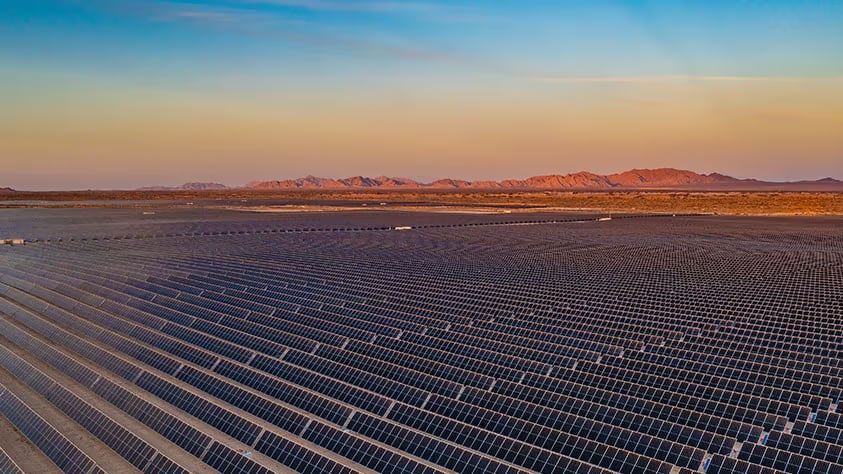
The company-level commitments are also becoming more specific. Codelco has communicated a broader decarbonization plan that includes a 70% cut to its overall carbon footprint by 2030, alongside work to reduce supplier-related emissions and electrify worker transport. BHP continues to maintain a target of at least a 30% reduction in operational greenhouse gas emissions by FY2030 from its FY2020 baseline, and a long-term goal of net-zero operational emissions by 2050, while also acknowledging that several technologies needed for full decarbonization are not yet ready to deploy at scale. Antofagasta has advanced renewable power procurement through long-term PPAs, including agreements designed to supply mining operations with renewable electricity.
The first stage of decarbonization is already visible in electricity procurement. Large mining companies have used renewable PPAs to reduce their exposure to fossil-based power. The next challenge is harder: replacing diesel in the mobile and remote parts of the operation, where haulage, drilling, auxiliary systems, and off-grid power still create a significant emissions and cost burden.
Peru shows the same pressure from a different angle. The country has a mining project portfolio worth approximately USD 54.6 billion, with copper representing the dominant share of planned investment. For new projects, capital is entering a world where climate-transition planning, carbon intensity, and credible energy strategy increasingly influence the way investors evaluate mining assets.
Vale, in Brazil, has also published a climate strategy centered on renewable electricity, energy efficiency, and electrification. In October 2024, Newmont commissioned its first battery-electric large mining truck at the Cripple Creek and Victor mine in Colorado, providing another reference point for high-capacity electric machinery in open-pit conditions. What looked experimental a few years ago is moving into procurement conversations.
Diesel is becoming a structural cost disadvantage
Mining is one of the most energy-intensive industrial sectors in the world. In Latin America, diesel has historically been the practical default for assets that operate away from grid connections: haul trucks, drilling equipment, underground operations, mobile systems, and processing facilities at remote sites.
The true cost of that diesel dependency is larger than the fuel invoice. Remote diesel generation also carries transport costs, storage requirements, maintenance burden, supply disruption risk, and exposure to price volatility. Academic work on off-grid mining has documented that electricity costs at remote sites can reach 330 USD/MWh once the full system cost is considered — up to 15% of mining revenue.
That cost profile changes the conversation. Decarbonization is not only a sustainability argument anymore. It is a cost-structure argument. Mines that remain highly dependent on diesel may carry a long-term disadvantage against peers that begin replacing diesel fuel with renewable power, storage, and controlled charging infrastructure.
The timing makes this more urgent. As ore grades decline in established deposits and extraction depths increase, energy consumption per ton of output tends to rise. That means energy strategy becomes more important as operations mature, not less. The mine that becomes energy independent no longer relies on unreliable fuel supply chains, market fuel cost variations, or a scarcity of fuel — and will protect profit margins in the most demanding production environments.
For the Andean region specifically, a 2026 ECLAC analysis of environmental mining legacies across the region adds another layer. Regulatory attention, community monitoring, and environmental credibility are becoming more important for new and existing projects. Energy performance is increasingly part of the license-to-operate conversation.
The bottleneck is no longer intent — it is infrastructure
Remote site power remains one of the hardest problems for a significant share of Latin American mining capacity. Many productive operations in the Andes sit far from national grid infrastructure. Connecting those sites can require permitting cycles, civil works, transmission upgrades, and capital commitments that do not always fit project planning timelines.
Standalone renewable generation helps, but it does not solve the full problem by itself. A solar array without storage cannot reliably support continuous, high-draw mining operations through every shift. Heavy electric equipment also creates sharp charging loads that need to be managed, not simply connected.
Charging infrastructure for heavy electric vehicles is its own bottleneck. A large battery-electric haul truck is not a passenger EV. The power levels are higher, thermal management is more demanding, and the connection must operate in environments defined by dust, vibration, heat, altitude, and continuous movement. Recent heavy-haul electrification programs show that the sector is moving toward MW-scale charging, but the supply base is still developing.
Capital timing adds another layer of friction. The operational savings from electrification and renewable integration are real, but they accrue over time. The infrastructure investment arrives first. For mid-sized operators without the balance sheet of a Codelco, BHP, or Vale, that timing mismatch can slow decisions even when the long-term economics are favorable.
This is where solution design matters. Mining operators do not only need individual technologies. They need a sequence: audit the energy profile, identify the highest-exposure diesel assets, size storage and charging infrastructure realistically, and structure financing in a way that allows early savings to support the next phase of deployment.
Where operators should start: energy exposure, asset timing, financing risk
For mining developers and operators in Latin America, the pressure to transition is coming from several directions at once: financing conditions, regulatory scrutiny, community expectations, fuel-cost exposure, and the operational need for resilient power.
The practical starting point is an honest energy audit. Operators need to know how much of their current operating cost is diesel-denominated, where that exposure is concentrated, and which assets are approaching replacement cycles. That baseline is what turns decarbonization from a broad ambition into an infrastructure plan with real numbers behind it.
The technology path does not need to begin with a full-fleet conversion. In many cases, the first step is a phased deployment: one or two electric units, dedicated on-site storage, and charging infrastructure sized for the first operating use case. The data from that first phase can then inform the next investment decision.
The financing question should also come earlier. Institutional investors and investor-led initiatives are increasingly using sector benchmarks, transition plans, and carbon-performance assessments to evaluate mining companies and assets. A project that waits until late-stage financing to explain its energy transition strategy may face avoidable questions about risk, cost, and long-term competitiveness.
For new mines, energy infrastructure belongs in feasibility. For existing mines, it belongs in the asset replacement plan. In both cases, the operators that move first will have a clearer view of cost, power resilience, and future regulatory exposure.
FAQ
Is battery storage more cost-effective than diesel generation for remote mining sites?
It can be, especially where diesel must be transported over long distances and the site has strong solar or wind resources. The fully loaded cost of diesel generation can rise significantly once fuel transport, storage, maintenance, and disruption risk are included. Battery storage paired with renewable generation can reduce that exposure, but the economics depend on site location, energy demand profile, equipment cycles, and financing structure.
Can a mid-sized mining operation realistically deploy electric haul trucks and on-site storage?
Yes — but the practical entry point is usually not full-fleet electrification on day one. A more realistic path starts with a limited number of electric assets operating alongside the diesel fleet, supported by dedicated storage and charging infrastructure. That first phase generates operational data, validates the business case, and reduces risk before larger deployment.
What is slowing the energy transition in Andean mining specifically?
Three factors appear consistently: distance from grid infrastructure, limited awareness of purpose-built heavy mining charging equipment, and capital timing friction for operators below the major-company tier. The technology barriers are smaller than they were three years ago, but project finance and procurement models still need to mature.
How does a mining operation's energy profile affect access to project financing?
A mining project with high diesel dependency in a region with strong renewable potential can be read as a transition risk. Investors are increasingly looking for credible transition plans, not just production potential. The practical implication is simple: decarbonization planning belongs at the feasibility stage, not after financing terms have already been discussed.
How QiOn builds for mining environments
QiOn has developed its mining energy solution for the conditions that traditional electric vehicle equipment was not built to handle: extreme temperatures, dust, vibration, remote operations, and MW-scale power delivery for heavy electric vehicles.
The core system is an AC/DC/DC or DC/DC BESS configuration integrating THUNDERSTORAGE with Q-EMS, structured to function as a Virtual Power Plant at the site level. This helps decouple vehicle charging cycles from grid availability and stabilizes the local power system by managing peak demand before it disrupts operations. For sites without microgrid access, MEGABRIQ offers mobile DC-to-DC storage of up to 2 MWh on a standard fifth-wheel platform, under 22.5 tons.
Q-EMS provides predictive and adaptive control, helping the system anticipate frequency fluctuations, overloads, and demand peaks rather than reacting only after problems appear. On the charging side, QiOn's QSDS step-down system, MegaSource power units, and MCS MegaWatt connectors support multi-MW output in harsh outdoor conditions, with optional automated robotic arm deployment for demanding heavy-duty environments.
QiOn's Strategic Services team supports projects from site assessment through commissioning, with commercial structures such as leasing and pay-per-kW models available to operators that need flexibility in how they finance the transition.
Want to talk about a mining project? Learn more about QiOn's mining energy solutions or get in touch.
Sources
- Harris Gomez Group — Chile Carbon Neutrality Agreement
- Reuters — Codelco Decarbonization Plan
- BHP — Operational GHG Emissions
- Antofagasta — Renewable Power Contract
- EY Peru Mining & Metals Investment Guide 2025/2026
- Climate Action 100+ — Mining Net Zero Standard
- Transition Pathway Initiative — Carbon Performance Assessment, Diversified Mining
- Vale — Climate & Energy Strategy
- Newmont — First Battery-Electric Mining Truck
- ECLAC — Managing Environmental Mining Legacies in the Andean Region
- Hybrid Power Systems — Off-Grid Mining Energy Cost Paper